Rwanda
Gorilla Express
5 nights from £4,385pp
Includes: flights, transfers, accommodation, 1 gorilla permit
Gorilla trekking in Rwanda
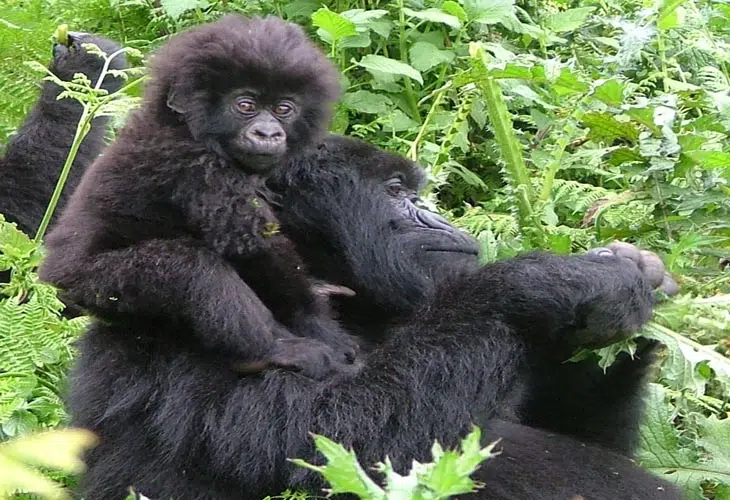
Overall, a brief but action packed visit to Rwanda’s Parc National des Volcans allows you the chance to have one of the most incredible wildlife experiences possible anywhere in the world.
Therefore, if your time is limited, this trip is perfect over a long weekend or can be added to a longer safari in Kenya or Tanzania.
Minimum age limit for visiting gorillas in Rwanda is 15. Prices are only a guide as they are affected by currency fluctuation, changes in flight costs etc. Includes:
- Return International Flights as per the itinerary
- All airport taxes and security charges
- Accommodation and meals as specified
- Transfers as specified
- Activities and excursions as specified
- All entrace fees on sightseeing tours as specified
““If there is one ‘must do’ wildlife experience in Africa it is having the privilege to observe close up the Mountain Gorillas of Rwanda and Uganda … live your own ‘David Attenborough’ moment!”.”
Above all, this itinerary includes a mid-range price per person sharing (from £4,385, staying at Heaven Boutique Hotel in Kigali and Mountain Gorilla View Lodge in Volcanoes National Park). Alternatively, higher standard accommodation price per person sharing (from £13,460, with Kigali Serena Hotel in Kigali and One&Only Gorilla’s Nest in Volanoes National Park).
Furthermore, other accommodation options are available, contact me for details.
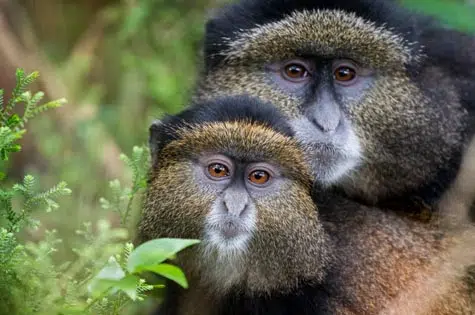
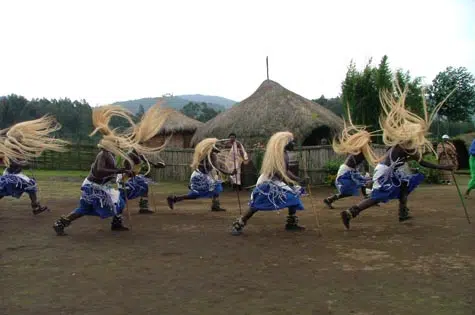
Activities that you can partake in aside from gorilla tracking, include visiting attractions such as Iby’wacu cultural village, the twin lakes of Buhondo and Burera, the Musanze Caves, Dian Fossey’s grave and tracking golden monkeys (all at extra cost).
- Day 1: Depart on the early morning flight from London Heathrow to Kigali via Amsterdam. On arrival you will be met and transferred to your hotel for overnight.
- Day 2: Your professional driver-guide will transfer you to Musanze near Parc National des Volcans to stay 2 nights at Mountain Gorilla View Lodge (mid-range option) OR One&Only Gorilla’s Nest (King room; upmarket option), all meals included Drive time approx 2½ hours.
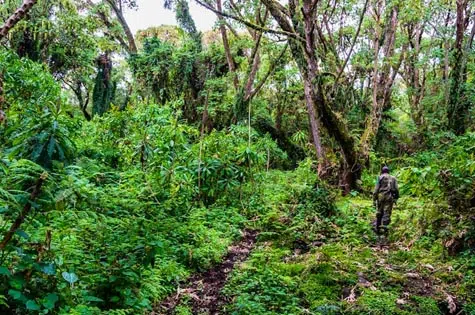
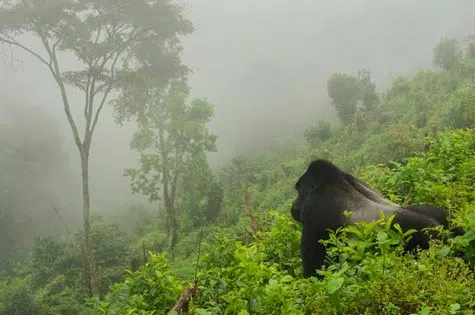
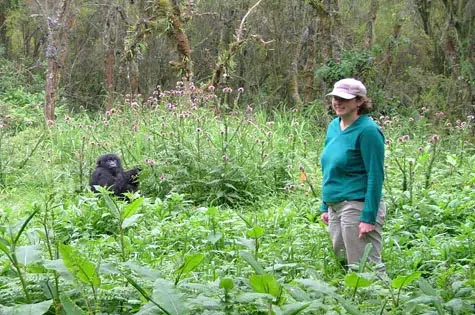
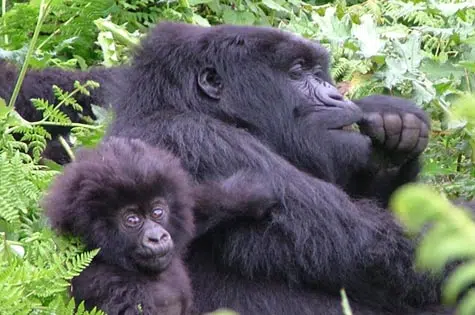
- Day 3: After an early breakfast, you will be taken to the ORTPN Park Headquarters for a briefing at 07h00. The head ranger will advise you on appropriate conduct while gorilla tracking. Experienced trackers then lead you into the forested slopes to seek one of the bands of Mountain gorilla. The hour that you are able to spend among these gentle giants is one of the most incredible wildlife experiences to be had anywhere in the world – superlatives simply fail to convey how impressive it actually is. Time taken to reach the gorillas may be as quick as 30 – 45 minutes, or it may take several hours. Balance of the day at leisure or to go sightseeing with your driver-guide.
- Day 4: Today you have the chance to do a second gorilla trek (additional permit is US$1,500), or alternatively, visit Dian Fosey’s memorial, trek to see the Golden monkeys; take a nature or birding walk in Parc National des Volcans or climb Mt Bisoke. For gorilla conservation reasons, all activities at the park commence in the early morning. In the afternoon, you will be driven back to Kigali airport to check in for the overnight flight to Amsterdam departing 20h20 – alternatively combine gorilla tracking with other Eastern African destinations.
- Day 5: Arrive UK
In summary, this is just one example of tailor made holiday to trek the Mountain Gorillas. Contact me to discuss your own requirements and I will curate a bespoke itinerary to suit, any duration and dates.
A few impressions…
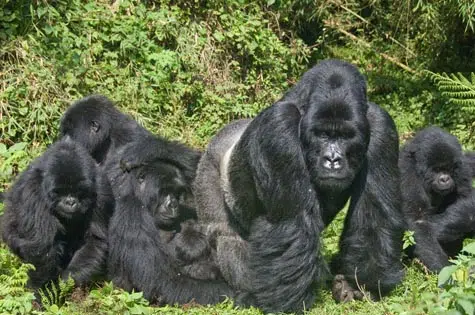
“Jimmy was a fantastic guide, thank you Jules for getting him on the trip with us. Virunga lodge was a little paradise on earth with beautiful sunsets and sunrises, great food, lovely people that wanted to do anything for us, just amazing. We saw the gorillas on all 3 days – incredible!”
Hera & Taco

Let us begin the journey that will create memories to last a lifetime.